Article
Your smartwatch says you have atrial fibrillation — what next?
Published 4 October 2026
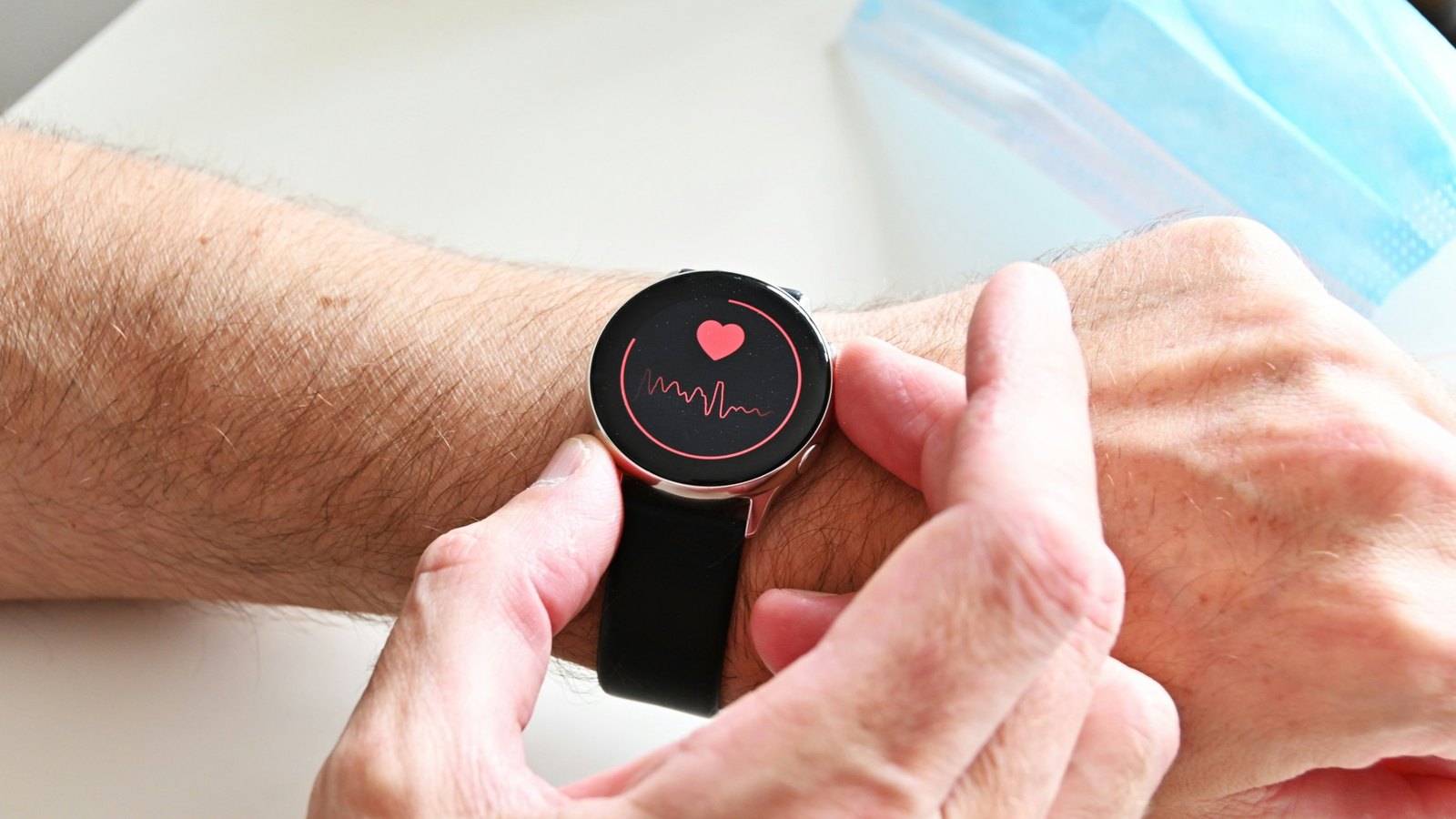
Smartwatches and fitness bands have become remarkably good at spotting irregular heart rhythms. If your watch has told you it detected an “irregular rhythm” or possible atrial fibrillation, it is understandable to feel alarmed. The good news is that this notification is a prompt to get checked — not a diagnosis, and not an emergency in itself.
What your watch is actually measuring
Most wearables use one of two methods. The optical sensor on the back of the watch measures your pulse through the skin (photoplethysmography) and looks for irregularity. Some watches can also record a single-lead ECG when you hold a finger to the crown or band. Both are genuinely useful screening tools, and the ECG feature in particular has been cleared by regulators for flagging possible atrial fibrillation.
What they cannot do is give a definitive medical diagnosis. Wearables produce false alarms — movement, a loose fit, or simply extra beats can trigger a notification — and they can also miss things. An alert means “this is worth a proper look,” no more and no less.
Why atrial fibrillation is worth taking seriously
Atrial fibrillation (AF) is the most common sustained heart rhythm disturbance. Many people feel palpitations, breathlessness or fatigue, while others have no symptoms at all. The reason it matters is that AF increases the risk of stroke, and that risk can be substantially reduced once AF is confirmed and assessed. So a watch that nudges you towards diagnosis earlier is, on balance, a helpful thing — provided the alert is followed up properly.
Sensible next steps
If your watch flags a possible rhythm problem and you feel well, there is no need to panic. A measured approach works best:
- Save the data. If your watch can record and export an ECG, keep those traces — they are genuinely useful to the clinician reviewing you.
- Note your symptoms. Jot down when episodes happen, how long they last, and what you feel.
- Arrange a review. See your GP, or arrange a specialist assessment. A rhythm shown on a watch usually needs to be confirmed with a medical-grade ECG or a period of monitoring.
How a diagnosis is actually confirmed
A proper assessment combines your history with a formal recording of the heart rhythm. Depending on how often episodes occur, that might be a standard ECG, a wearable monitor over several days, or a longer-term recorder. Alongside this, an echocardiogram and blood tests help build the full picture and guide any treatment — whether that is reducing stroke risk, controlling the heart rate, or restoring normal rhythm with medication or catheter ablation.
When not to wait
A watch notification on its own is not an emergency. But if you have chest pain, severe breathlessness, fainting, or symptoms of a stroke — such as face drooping, arm weakness or slurred speech — call 999 immediately, regardless of what any device shows.
The bottom line: treat a smartwatch alert as a useful early warning rather than a verdict. Keep the data, get a proper assessment, and let a formal diagnosis guide what, if anything, needs to be done.
This article is for general information and is not a substitute for individual medical advice. Reviewed by Dr Iain Sim.